

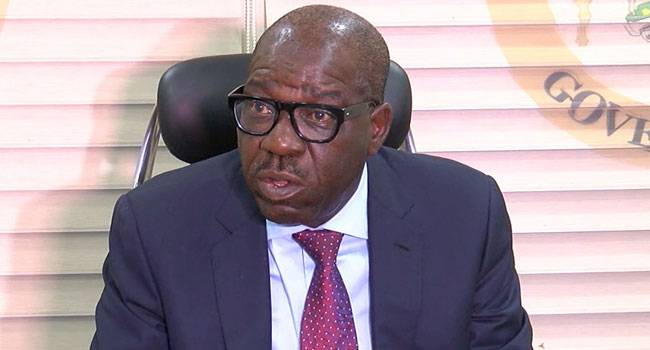
Speaking during a meeting with the party’s elders and leaders from Etsako in Edo North over the weekend, Governor Obaseki revealed that his deputy’s actions amounted to a coup and an attempt to forcibly remove him from office. Excerpts: Can you claim that you are surprised by the unfolding events between you and your deputy, Comrade Philip Shaibu? If I were to say that the recent events of the past weeks haven’t surprised me, it would be untrue. I never anticipated that we would find ourselves in this situation again. My deputy has often stated that he accompanied me to the PDP, and it’s true that integrating into the PDP platform presented challenges, as is common in any partnership. However, given my background, I believed in delegating responsibility. The emphasis lies in building institutions, not individual personalities, as individuals are transient, whereas institutions endure. Therefore, in all our endeavors, I involve the deputy governor and the Secretary to the State Government (SSG), informing them of my actions as a precaution. When I’m unable to carry out a task, I delegate it. When I go on vacation, I entrust power to my deputy.
The first instance was during my vacation when he contacted me and asked, “What should I do, sir?” I responded, “You are in charge; make mistakes if needed, and I’ll rectify them upon my return.” After all, I am just an individual; if something were to happen to me during my travels, wouldn’t Edo State continue? This power isn’t solely mine; it’s bestowed by God.
Why did you grant your deputy such extensive latitude, considering that in most states across the nation, the reverse is the norm?
Our modus operandi was appropriate. Governance should continue, and transparency is key, meaning everyone must be aware of our actions and responsibilities. This can only happen when there’s complete trust, ensuring that individuals won’t deviate from their commitments. This has been our approach in Edo, even amidst the challenges of the past seven years. However, perpetual crisis is unsustainable; we must eventually seek peace.
When did you perceive the deterioration in your relationship with your deputy governor?
I believe it culminated during the Akoko Edo Chairmanship matter. The issue initially arose in Owan East and then spread to Akoko Edo, where the community’s preference for the chairmanship clashed with my deputy’s choice. The people wanted one candidate, but my deputy favored another. I insisted on respecting the people’s wishes. I inquired about who could help us manage the local government effectively, and the consensus was a particular individual. When the party chairman asked for my opinion, I advocated for the people’s choice. This is democracy in action.
That was the turning point. He left without informing me, and I later saw him on television at the National Assembly inauguration. He began circulating claims of consultation. Following the National Assembly election, we met, and I emphasized the importance of consolidating our party for the upcoming gubernatorial election. I urged patience, focusing on our current responsibilities to strengthen our ability to endorse a successor.
Was your deputy governor’s intention to run for governor not discussed during these events?
No, until now, my deputy governor has never approached me privately, saying, “Sir, I’m contemplating running and succeeding you.” Meanwhile, he’s been asserting that he’s consulting. I remained silent. He continued his activities, but let me return to the core issue that triggered this problem.
After I inaugurated the House of Assembly, he was in Abuja. Before he left, I summoned the party chairman, discussing the nominations for commissioners, our standard practice. However, he declined to attend the meeting. This is why Etsako region lacks a commissioner. I proceeded, intending to include his nominations once he was prepared. He went to Abuja, boasting about his connections and support from the National Assembly and the President.
If the PDP nomination eluded him, he knew what to do. I remained silent, surprised by his attitude. What shocked me further, which I’ve never disclosed, was his action on the day we were set to elect principal officers in the House of Assembly. He had been absent but returned that day. As the Chief Security Officer of the State, I possess relevant information but exercise discretion.
My deputy contacted an APC leader, proposing a collaboration between APC and five loyal PDP members to elect a Speaker in a particular manner. This information was corroborated elsewhere. I called the PDP members to my residence, but he attempted to enter without protocol. I reminded him of the need for courtesy and privacy. After learning about his actions, I barred him from our meeting. Our actions proceeded as planned.
Does this imply that your deputy governor opposed your objectives and acted against your interests and those of the party?
In my view, his actions weren’t in our collective interest. Why would the deputy governor seek a different Speakership candidate than what I desired? Are we truly aligned? This was when I realized a problem existed. It seemed that my deputy governor was becoming desperate for power, willing to undermine me. How can someone claim loyalty while behaving in such a manner?
The subsequent events unfolded as you observed. He conducted himself as if we were no longer part of the same administration. His actions would surely affect other candidates and parties involved. He alleged impeachment plans against him, prompting me to contact the Speaker for clarification. I learned that he had called the Speaker, discussing a collaboration between APC and some PDP members to elect a Speaker. However, the Speaker denied such plans.
I inquired about the alleged impeachment plot. The deputy governor served us court summons to prevent the supposed impeachment. I questioned this move, as there were no such plans. What concerned me was the reasons he cited in his petition. The matter is before the court, so I’d rather not delve into it extensively. How could a public officer make false statements in an affidavit?


 Nigeria Vogue Media News and Advertising Campaign Company serves as a pioneering journalism watchdog, providing valuable and patriotic insights into various executive arms of government, both at the state and federal levels. Our reach extends beyond Nigeria, as we showcase the nation’s accomplishments and governance strategies to the rest of the world.